



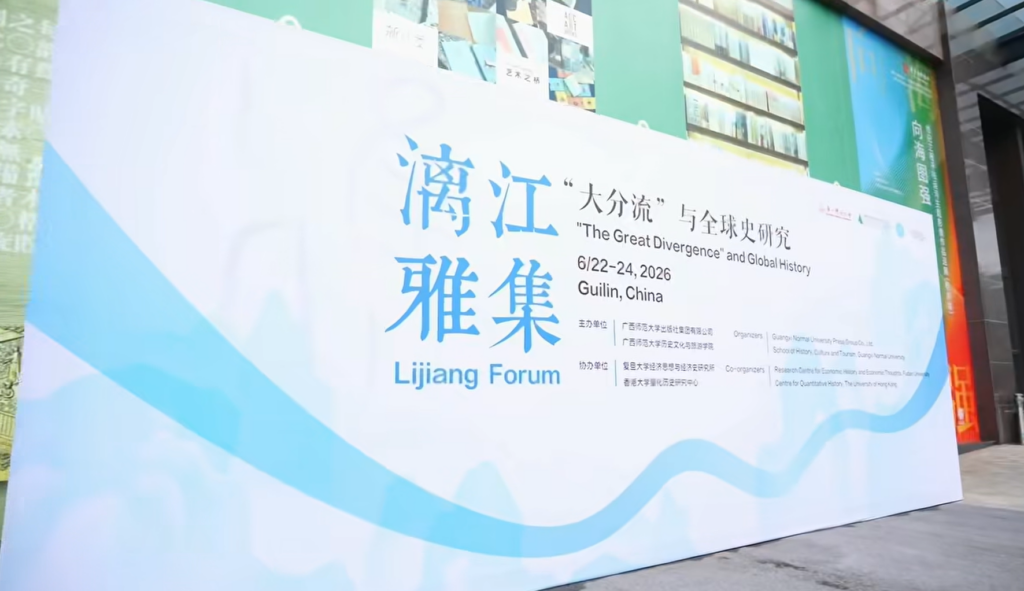
由廣西師範大學出版集團有限公司、廣西師範大學歷史文化與旅遊學院聯合主辦,並由復旦大學經濟思想與經濟史研究所、香港大學量化歷史研究中心協辦的首屆「漓江雅集」國際學者來華交流活動,於 2026 年 6 月 22 日到 24 日在廣西壯族自治區桂林舉行。
Jointly organised by Guangxi Normal University Press Group Co., Ltd. and Guangxi Normal University’s School of History, Culture and Tourism—in collaboration with Fudan University’s Research Centre for Economic History and Economic Thoughts and The University of Hong Kong’s Centre for Quantitative History—the First Lijiang Forum was held from 22–24 June 2026 in Guilin, Guangxi, China.
 In the News

Twelve editions on, the QH community gathered in Wuhan to explore how data, AI, and new methods are reshaping the study of history.
News
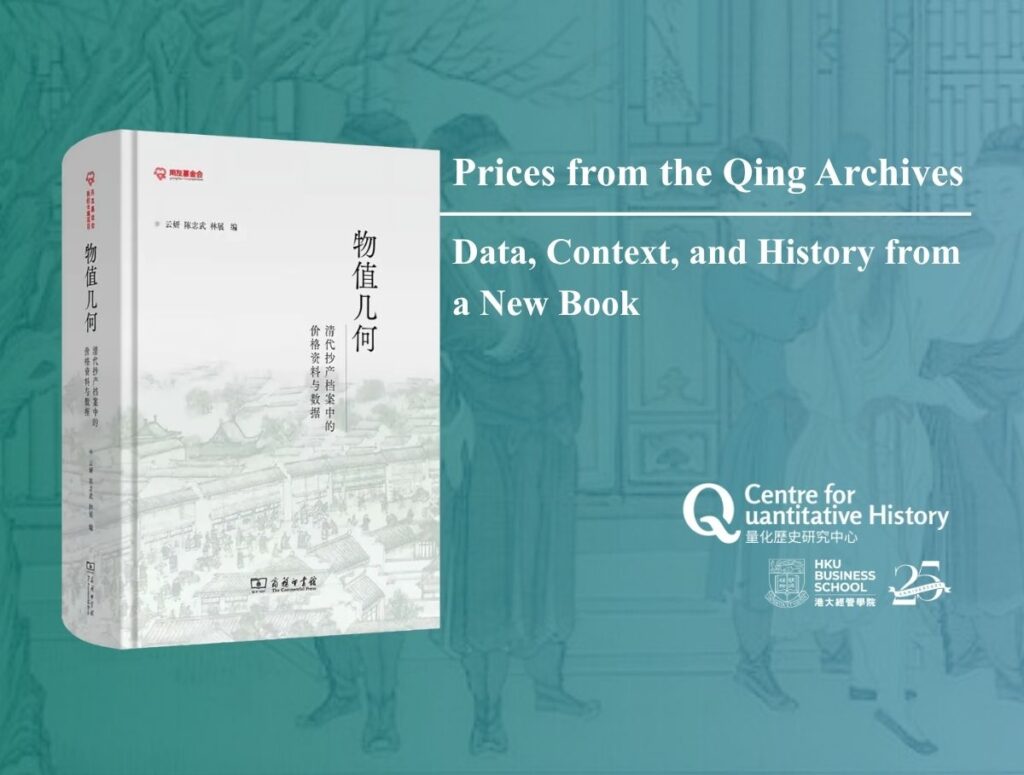
We are delighted to present《物值幾何:清代抄產檔案中的價格資料與數據》—a major scholarly work that brings together rich historical records and rigorous data-based analysis. Written by our Director, Zhiwu Chen, as well as our Co-Principal Investigator, Zhan Lin, together with their co-author, Yan Yun, the book offers a systematic approach to understanding Qing-dynasty asset and commodity values.
News
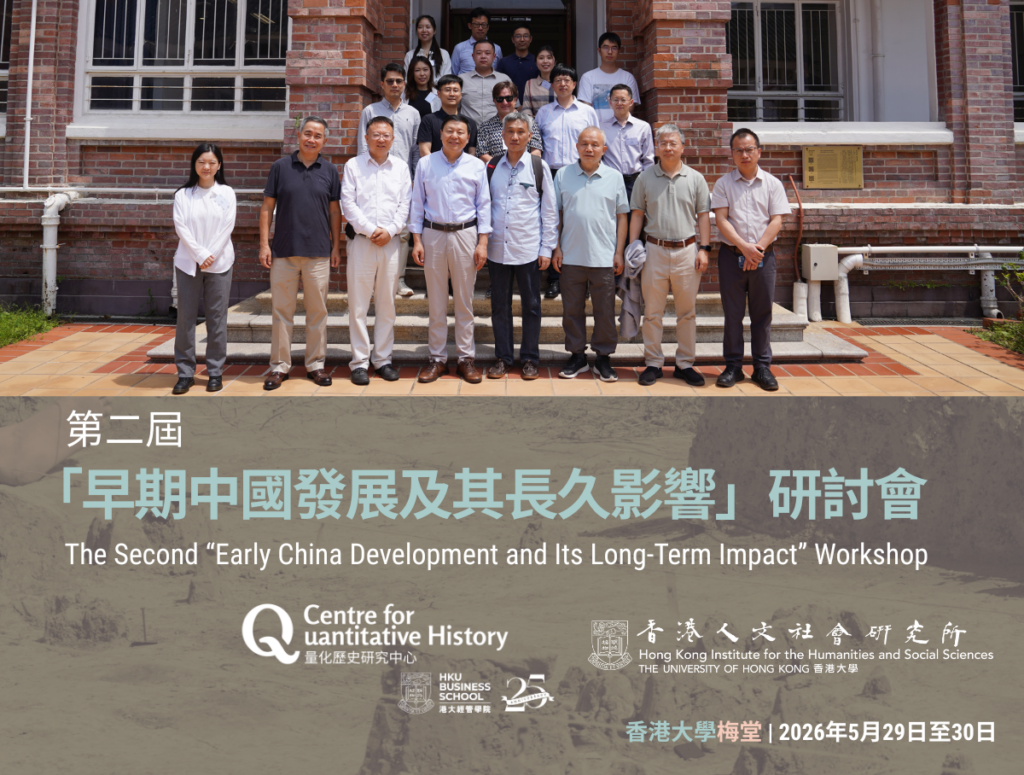
Co-organised by the Centre for Quantitative History (CQH) and the HK Institute for the Humanities and Social Sciences (IHSS), the workshop brought together archaeologists, historians, economists and legal scholars to explore how new data, quantitative methods and archaeological evidence are reshaping the study of early China.
News
 Announcement

面對這樣的世界,人們難免疑惑:人類社會是否仍有出路?回望從春秋戰國到今日世界的歷史軌跡,我們或許能更清楚地看見,技術變革如何撕裂社會,並重新塑造秩序。
In the News

Our director’s research is cited in FPIF’s analysis. The article written by Jianlu Bi, “Why the War in Iran Defies a Quick End” analyses escalation pressures, regional incentives, and the limits of quick resolutions, drawing on this scholarship to illuminate why a rapid end is unlikely.
In the News

We are now inviting applications for positions in the upcoming academic year 2026/27. Opportunities are available for scholars at various career stages.
Announcement
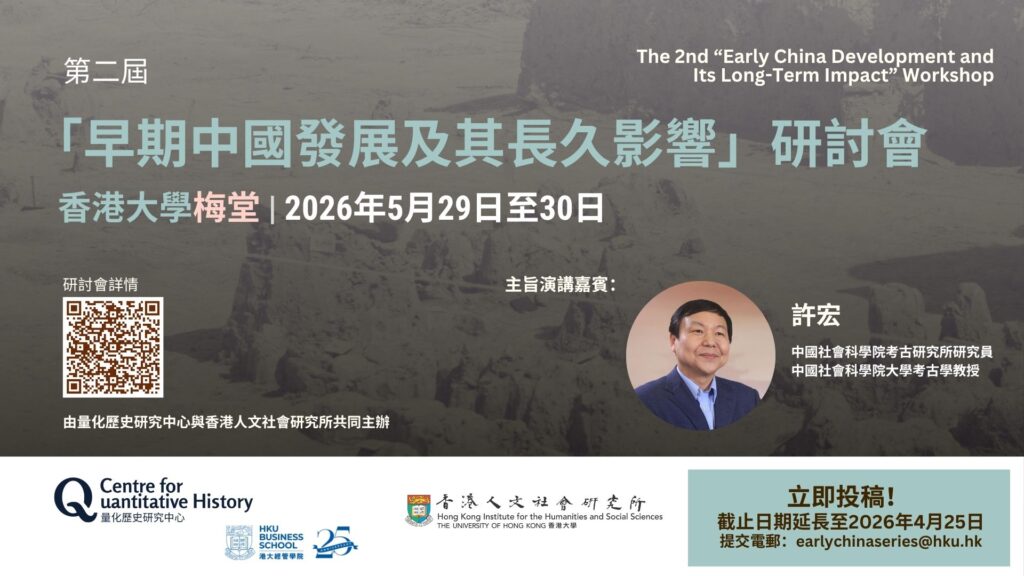
A two-day workshop at HKU examining how early China’s social, economic, and institutional changes shaped civilisation for millennia.
Announcement

The Financial History, Trade and the Rise of Hong Kong Cluster of the Area of Excellence project, under the Centre for Quantitative History, successfully held the first HKU Financial History Workshop on December 2–3, 2025 at May Hall, The University of Hong Kong.
News

Bringing together scholars from HKU, CUHK, HKUST and HKBU, the event marked the beginning of a new local academic exchange platform for economic historians.
News

The global economic history community is celebrating a remarkable achievement — and here at the Centre for Quantitative History (CQH), we share in that pride as we honour Professor Joel Mokyr’s 2025 Nobel Memorial Prize in Economic Sciences alongside Professors Philippe Aghion and Peter Howitt, in recognition of their ground‑breaking work on innovation‑driven economic growth.
News
- 1
- 2