



We exploit differences in the hometowns of graduates from China’s first specialized legal university to estimate the effect of modern court establishment on local financial development. In response to the urgent need for legal modernization, Chaoyang University was founded in 1912 and graduated more than 3,000 legal professionals. Counties with varying numbers of Chaoyang graduates had different opportunities to access specialized knowledge-legal professionalism-and consequently varied prospects for establishing modern courts. The establishment of county-level courts has a significant positive impact on the development of local banking industries, which are heavily dependent on the local legal environment. This effect is achieved through the facilitation of standardized and specialized legal services and the strengthening of trust in modern financial institutions.


We construct a continuous decadal GDP dataset for China spanning 220 BCE to 1949 CE. Over more than two millennia, China’s economic trajectory exhibits a millennial-scale inverted U-shape: GDP per capita (1990 international dollars) rose from 380 in 220 BCE to a peak of 1,430 in 1000 CE, then entered a period of fluctuating decline after the Northern Song, stabilizing at around 550 by the early twentieth century. Our empirical analysis indicates that China’s long-run economic growth followed a Malthusian pattern. The key difference between the first and second millennia lies in the emergence of severe land–population pressures during the latter, coupled with weak performance in human capital accumulation and technological progress. Chinese history demonstrates that long-term economic growth has been fundamentally knowledge-driven.

Political succession in authoritarian regimes is perilous. An under-explored aspect of this challenge is the conflict of interest between new leaders and the ruling coalition they inherit from their predecessor right after the transition of power. Using original data on minor emperors and regents, we show that female regents, who were culturally protected from political purges but also discouraged from seizing power, can mitigate the two-sided commitment problems and enhance political stability for the young emperor.

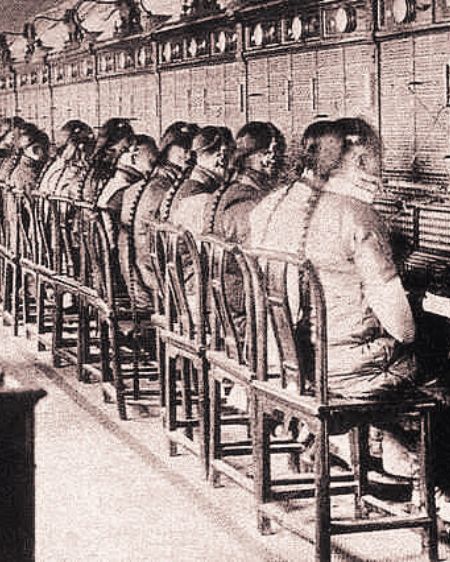
The impact of modern information technology on state capacity is relatively underresearched. This paper explores the introduction of the telegraph in the late 19th-century China, the purpose of which were mostly military, to quantify the impact of information technology on state’s capacity to obtain local information about natural disasters and to provide famine relief.
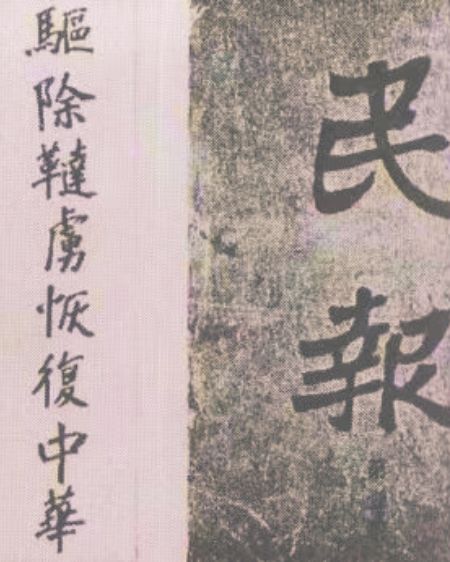
Nations are products of modernity, but they also have historical roots. In the conquest of China in the mid-17th century, the Manchu-led Qing government oppressed the Han Chinese, the native population of China. Two centuries later, when modern newspaper technology became available, revolutionary propagandists exploited these events, reframing the political repression as ethnic conflict to ignite nationalist fervor.
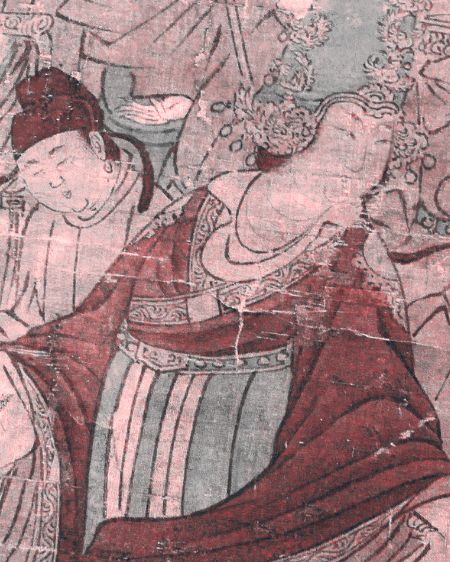
This paper examines the transition from limited to open-access societies, focusing on early and high-Tang China (618–906). Using a dataset of 1,261 marriages from 618 to 755, we find that Empress Wu’s rise to power in 674—the first and only female emperor in Chinese history—positively impacted upward mobility. After 674, men from common and poor clans were more likely to marry into elite clans. This increase in inter-class marriages was primarily driven by Empress Wu’s expansion of national civil examinations, which strengthened her legitimacy and created new opportunities for social advancement.
This study exploits a special historical case-openings of treaty ports in 19th-century China to examine how upper-tail human capital, quantified via book creation, impacted modernization when facing external pressures. Employing a prefecture-level panel dataset from 1840 to 1904, the study establishes book density, indicative of knowledge endowment, as a significant and positive predictor of modern firm entry following the opening of treaty ports. To understand the mechanism, a critical aspect lies in understanding the Civil Service Examination (keju), an indigenous institution that historically dominated talent accumulation and allocation in China. By integrating data with keju, we find that exposure to Western influence mobilized the segment of upper-tail human capital at the bottom or outside of the keju system into entrepreneurship. This paper illustrates the dynamics between indigenous institutions and external pressures.

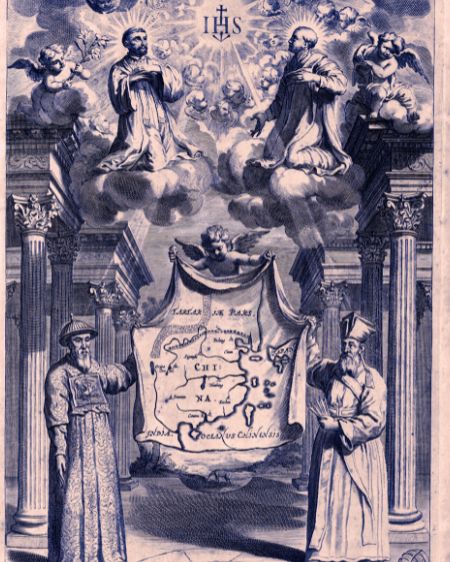
Christian missionaries are shown to have contributed to the historical rise of international trade by bridging the information gap between Europe and unfamiliar overseas lands from the 16th century onward. To prove that they unintentionally mitigated information barriers for early traders, we focus on the experience of historical China where European missionaries arrived from 1580 onward but maritime foreign trade was largely banned between 1371 and 1842. Our analysis demonstrates that following China’s forced opening for international trade in 1842, regions with longer past missionary presence typically bought foreign goods earlier, imported more in terms of both value and goods diversity, and exported more local products, as these places had more foreign interactions and appeared more frequently in the missionaries’ letters and publications back in Europe. Our findings substantiate the importance of the information channel through which the missionaries accelerated trade globalization.
We examine the long-term pattern of state formation and the mythical historical Chinese unity under one single political regime based on the compilation of a large geocoded annual data series of political regimes and incidences of warfare between 221 BC and 1911 AD. Guided by a carefully constructed historical framework and narrative, we classify our data sets into two types of regimes – agrarian and nomadic – and three types of warfare– agrarian/nomadic, agrarian/agrarian and internal rebellions – and applying an Autoregressive Distributed Lag (ARDL) model, we find that nomadic-agrarian warfare and internal rebellion strengthens unification but agrarian/agrarian warfare entrenches fragmentation. Our paper offers a comprehensive analysis on both the historical processes and driving force leading to China’s eventual unity in a comparative and global context.

- 1
- 2