


 July 22, 2026
 News
NewsIn Chinese tradition, twelve years mark the completion of a full cycle. For the Quantitative History Summer School, the 12th edition therefore carried a special sense of return, reflection and renewal. From July 4 to 13, 2026, 120 students and young scholars from more than 50 universities and research institutions gathered at Central China Normal University in Wuhan for ten days of intensive training, research discussion and international exchange.
Held together with the International Symposium on Quantitative History, this year’s programme added intellectual energy to the summer heat of Wuhan, bringing together historians, economists, political scientists, archaeologists, digital humanists and data scientists for a vibrant exchange. Through lectures, group discussions and conference panels, participants explored how data, archives, algorithms and historical interpretation can work together to open new ways of understanding the past.
The event was jointly organised by the Centre for Quantitative History (CQH) at HKU Business School, the School of History and Culture and the Institute of Modern Chinese History at Central China Normal University, and the Institute of Qing History at Renmin University of China. It was hosted by the Digital History Research Center at Central China Normal University, with support from the International Society for Quantitative History and the HK Institute for the Humanities and Social Sciences.
From Guizi Mountain to a Global Research Community
The programme opened on July 4 at Central China Normal University’s Guizi Mountain campus, where participants were welcomed by faculty members, organisers and student volunteers. Orientation and team-building activities helped students from different universities and disciplines get to know one another before the start of the academic programme.
At the welcome dinner, Prof. Zhiwu Chen, CQH Director and founder of the Summer School, looked back on the development of the programme over the past twelve editions. He encouraged participants to be ambitious in their research questions, careful in their use of evidence, and open to collaboration across disciplinary boundaries. His remarks set the tone for the days that followed: quantitative history is not simply about applying methods to historical materials, but about asking better questions with stronger evidence.
Turning Historical Sources into Research Frontiers
The teaching programme began with a close look at historical sources and the process of turning them into analysable data. Prof. Kaixiang Peng of Wuhan University, a CQH Fellow, introduced participants to the quantitative study of folk documents. Drawing on land contracts, rural records and long-term evidence on living standards, he showed how seemingly local and fragmented materials can be used to study property rights, tenancy, markets, welfare and social change in traditional China. He also discussed how artificial intelligence and multimodal tools are changing the way scholars organise, read and interpret historical documents.
Our collaborator Prof. Denggao Long of Tsinghua University examined more than 10,000 documents from the Yu lineage in Jiujiang to trace nearly three centuries of family economic development. His lectures highlighted land transactions, tenancy, finance and lineage governance, showing the complexity of traditional land markets and rural economic institutions in China.
Prof. Zhan Lin of Renmin University of China, also a CQH Fellow, led sessions on historical inequality and Confucian lineages. His lectures moved from key measures such as Gini coefficients, Lorenz curves, top income shares, extraction ratios and social tables to broader questions about wealth distribution, social stability, lineage organisation and long-term institutional effects. These sessions showed participants how quantitative tools can help connect micro-level historical evidence with large-scale social patterns.
A recurring message throughout the Summer School was that quantitative history begins not with numbers alone, but with source criticism. Prof. Shuji Cao of the CQH presented his work on Chinese population, land, taxation, corvée labour and agricultural tax databases from 1368 to 1953. His lectures demonstrated that historical data must always be reconstructed with close attention to administrative systems, local institutions and changing statistical categories.
Prof. Sijie Hu of the HK Institute for the Humanities and Social Sciences and HKU Social Sciences, a CQH collaborator, introduced the China Genealogy Database and discussed how genealogies can be used to study mortality, fertility, marriage, gender inequality and social mobility. She also highlighted the importance of addressing representativeness, missing female records and survival bias. The message was clear: large-scale data can be powerful, but only when handled with historical care.
AI, Algorithms, and the Historian’s Craft
New digital methods formed one of the most exciting strands of the programme. Prof. Yuqi Chen of the HK Institute for the Humanities and Social Sciences and HKU Arts, also a CQH collaborator, gave a lecture on historical psychology in the age of artificial intelligence, covering sentiment analysis, machine learning, large language models and historical simulation. Rather than presenting AI as a replacement for historical interpretation, she showed how it can help researchers ask new questions about emotions, moral language, social attitudes and historical imagination. She also introduced her latest AI-native game, Into the Painting: Along the River During the Qingming Festival / Ru Hua: Qingming Shanghe Tu(入畫:清明上河圖), which has since been selected for inclusion in the 2026 World Internet Conference Collection of Digital Cultural Heritage Cases.
Participants also received hands-on Stata training and took part in repeated group discussions. In these sessions, students presented their own research ideas, received detailed comments from faculty members, and discussed problems of data construction, identification strategy, source reliability and historical interpretation. These exchanges were among the most valued parts of the Summer School, giving young scholars the chance to refine their projects in a supportive but rigorous environment.
CQH members at the Centre of the Conversation
Several lectures by CQH members highlighted the breadth of the field today. Centre Director Prof. Zhiwu Chen delivered lectures on warfare, risk, technological change, civilisation and maritime trade. His talks examined topics ranging from the role of military technology in prehistoric social complexity to the impact of maritime trade on the rise of southern China during the Tang, Song and Yuan periods.
Prof. Chicheng Ma, Associate Director of the CQH, delivered a series of lectures on Confucian economic history. He discussed the Great Divergence, the imperial examination system, the reception of Western science in late imperial China, cultural persistence, local gazetteers and state governance. His lectures demonstrated how cultural ideas and local knowledge can be studied quantitatively without losing their historical depth and meaning.
CQH Fellow Prof. William Guanglin Liu of Lingnan University reflected on the data foundations of Chinese economic history and the fiscal transformation of the Song state.
The programme also brought leading international scholars into dialogue with the CQH community. Prof. Robert Allenof New York University Abu Dhabi and the University of Oxford lectured on poverty, welfare ratios, market integration, globalisation, capitalism and long-run wages. Prof. Guido Alfani of Bocconi University explored wealth inequality, pandemics, poverty and social mobility in preindustrial societies. Prof. Weng-Cheong Lam of the Chinese University of Hong Kong introduced quantitative archaeology through studies of iron artefacts and bronze mirrors in early imperial China.
A Symposium Showcasing the Next Generation
The International Symposium on Quantitative History was held on July 11 and 12. The opening ceremony was co-chaired by Prof. Wenxiang Wei of Central China Normal University and Prof. Zhiwu Chen.
Keynote presentations by Professors Guido Alfani, Weng-Cheong Lam, Robert Allen, Feng Chen, Min Ma, Heng Hu, and CQH’s own William Guanglin Liu and Cameron Campbell covered a wide range of topics, including inequality in ancient empires, lineage networks and civil service success in late imperial China, Han markets and archaeological evidence, private property and the origins of agrarian civilisation, Qing customs statistics, digital history, fiscal institutions and Qing bureaucratic databases.
Parallel panels in Chinese and English gave young scholars the opportunity to present new work on bureaucracy, political elites, state governance, finance, monetary systems, technology, industrialisation, merchant networks, taxation, migration, religion, public goods, gender, human capital, disasters, colonial legacies, cultural transmission and social mobility. Many papers drew on newly constructed datasets and methods such as text analysis, machine learning, spatial analysis, network analysis and quasi-experimental designs.
Celebrating New Research and Young Scholars
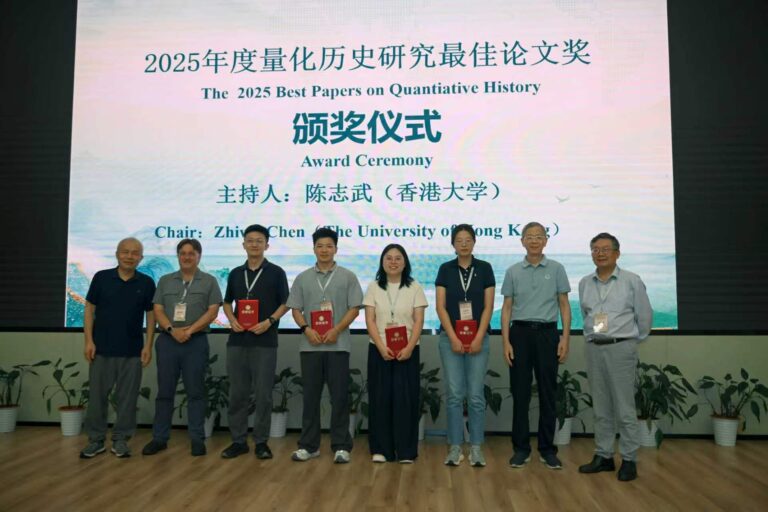
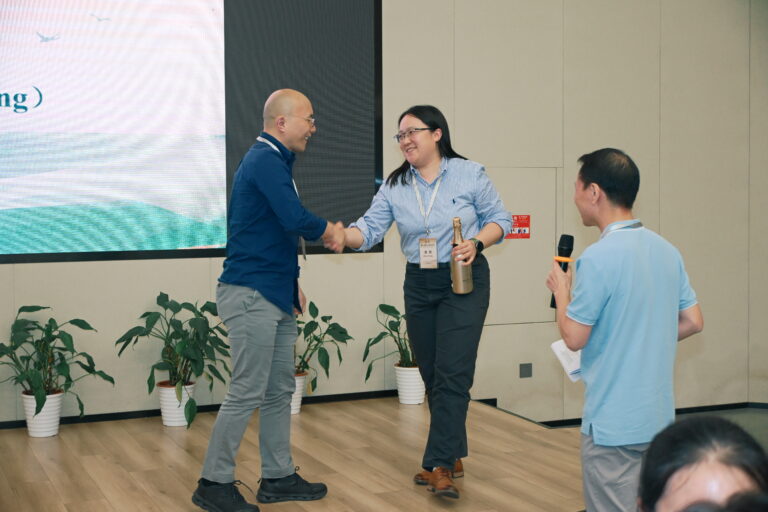
During the symposium, outstanding new research in quantitative history was recognised at an awards ceremony chaired by Prof. Kaixiang Peng. The 2025 Best Paper Awards were presented to studies on state-building and communist revolution in Republican China, Chinese emigration through transnational genealogies, and imports and industrialisation in modern China. The awardees were Ningning Ma of Jinan University, Wuyue You of Renmin University of China,Fanghao Chen, Bin Xie and Yibo Zuo of Jinan University, and Xinhao Li of HKU Business School.
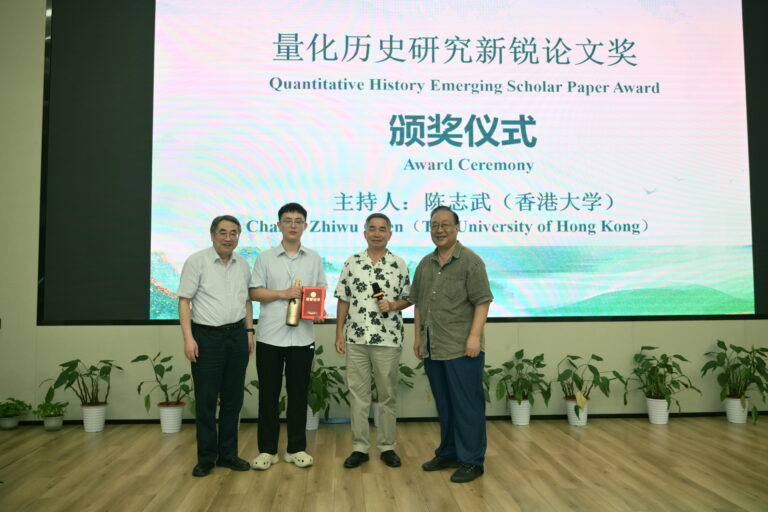
The symposium also launched the Emerging Scholar Paper Awards to recognise outstanding student-authored research. The inaugural 2026 awards were presented to Zhao Dong of the University of Oxford for her work on elite recruitment in imperial China, and Yi Pang of Xiamen University for his study of Ming land-tax data and surcharges.
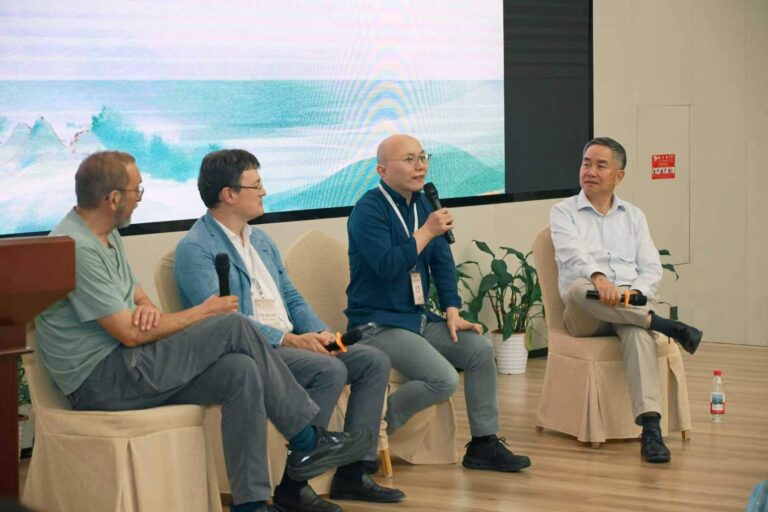
The evening concluded with a roundtable featuring Professors Robert Allen, Guido Alfani, Ying Bai and Zhiwu Chen, who shared advice on archaeological big data, academic writing and publication, cross-field collaboration, handling rejection, and developing clear, theory-driven research in the age of AI.
The Next Cycle Begins
The ten-day programme concluded on July 13 with a closing dinner, certificate ceremony, student reflections and performances. Student representatives spoke warmly about the intellectual intensity of the Summer School, the generosity of the instructors and the friendships formed through ten days of shared learning.
Many reflected that quantitative methods do not replace close reading, archival work or contextual interpretation. Instead, they offer another way to sharpen questions, test broader patterns and return to historical complexity with new evidence.
As the 12th Summer School came to a close, the meaning of a “full cycle” felt especially fitting. Over twelve editions, the programme has grown from a specialised training initiative into a vibrant international community. Yet the mood in Wuhan was not one of completion. It was one of continuation. With new data, new tools and a new generation of researchers, quantitative history is entering its next cycle.
About the Centre for Quantitative History
The Centre for Quantitative History (CQH) is a research centre at HKU Business School dedicated to big data-based historical inquiries and quantitative approaches to the study of China’s past. By integrating historical sources, data construction and interdisciplinary methods, the Centre aims to develop a more holistic understanding of China’s long-termdevelopment. The Centre is an area of excellence funded by the Research Grants Council under the University Grants Committee.
🙌 #QHSS2026 | The 12th #QH Summer School kicked off with inspiring lecture series by @QuantHistoryHKU centre members Prof. Kaixiang Peng @WHU_1893 and Prof. Zhan Lin @RUC1937, introducing students to the world of #QuantitativeHistory.
— Centre for Quantitative History (@QuantHistoryHKU) July 5, 2026
Kaixiang Peng explored quantitative… pic.twitter.com/NYf3vefjPo
Day 2 of #QHSS2026 | The 12th #QH Summer School is in full swing, with lectures spanning #EconomicHistory, #AI, #HistoricalPsychology, and #Risk: Prof. Denggao Long @Tsinghua_Uni on “A 300-year economic panorama of the Yu family: documents and database” Parts I & II, Prof. Yuqi… pic.twitter.com/BKGbh2MvX1
— Centre for Quantitative History (@QuantHistoryHKU) July 6, 2026
Day 3 of #QHSS2026 | The 12th #QH Summer School continues with lectures spanning #EconomicHistory, #QuantitativeMethods, #MaritimeTrade, and #FiscalHistory: our director Prof. #ZhiwuChen on “applications of quantitative methods in long-run historical research: war and the origins… pic.twitter.com/76zPUsUJ45
— Centre for Quantitative History (@QuantHistoryHKU) July 7, 2026
Day 4 of #QHSS2026 | The 12th #QH Summer School continued with a rich, familiar thread in our programme: #China’s #PopulationHistory and the #data behind it. Our very own Prof. Shuji Cao @QuantHistoryHKU, Prof. Sijie Hu @sijie_hu @hkihss @QuantHistoryHKU & Prof. Kaixiang Peng… pic.twitter.com/Wvdbm44aMx
— Centre for Quantitative History (@QuantHistoryHKU) July 8, 2026
Day 5 of #QHSS2026 | #QH Summer School explored #China’s #Archaeology with Prof. Weng Cheong Lam @CUHKofficial & #EconomicHistory with our associate director Prof. Chicheng Ma @ChichengM @QuantHistoryHKU — from Guanzhong iron and Han mirror networks to Confucian economic history.… pic.twitter.com/fuvjP0pBv1
— Centre for Quantitative History (@QuantHistoryHKU) July 9, 2026
Day 6 of #QHSS2026 | #QH Summer School took us across centuries and civilisations — from Prof. Robert C. Allen’s big question @NYUAbuDhabi @UniofOxford on why poverty persisted for most of human history, to Prof. Guido Alfani’s comparative look at inequality in the Aztec, Roman &… pic.twitter.com/602HJk8wom
— Centre for Quantitative History (@QuantHistoryHKU) July 10, 2026
🎉We’ve officially kicked off the 12th Symposium on #QuantitativeHistory with our director Prof. #ZhiwuChen’s opening remarks! #QHSS2026 #QuantitativeHistory #QHSummerSchool @QuantHistoryHKU @HKUniversity @HKUFBE @hkihss #HKU pic.twitter.com/FQLCSuCcUr
— Centre for Quantitative History (@QuantHistoryHKU) July 11, 2026
Our very own Prof. Cameron Campbell (@QuantHistoryHKU, @hkust) is sharing with the #QH symposium audience his most recent work on #socialmobility in the 19th century. ‘Family background matters a lot’ when looking at progression across different stages. #QHSS2026… pic.twitter.com/jAxNb0sto8
— Centre for Quantitative History (@QuantHistoryHKU) July 11, 2026
Our very own member @QuantHistoryHKU Fellow Prof. William Guanglin Liu @lingnanuni delivered a thought-provoking session, “It All Went to #Kublai: Environment, Economy, and Institutional Choice in ‘Inner Asian Pattern’ State Building,” highlighting how ecology and economy shaped… pic.twitter.com/AUIzHFqexv
— Centre for Quantitative History (@QuantHistoryHKU) July 12, 2026
Last night’s #QH Symposium roundtable featured Professors Robert C. Allen @NYUAbuDhabi @UniofOxford, Guido Alfani @guido_alfani @Unibocconi & Ying Bai @QuantHistoryHKU @HKUFBE, chaired by #ZhiwuChen @QuantHistoryHKU @HKUFBE @hkihss, discussing archaeological big data, academic… pic.twitter.com/YU5yiYdinP
— Centre for Quantitative History (@QuantHistoryHKU) July 11, 2026
Author(s)
CQH Communications Team