

 June 3, 2026
 News
News

Co-organised by the Centre for Quantitative History (CQH) and the HK Institute for the Humanities and Social Sciences (IHSS), the workshop brought together archaeologists, historians, economists and legal scholars to explore how new data, quantitative methods and archaeological evidence are reshaping the study of early China.
What can stone tools tell us about the rise of complex societies? Did iron technology strengthen states through farming, warfare or both? How might bronze inscriptions, burial goods, ancient bodies and administrative records help us understand the long-term development of China?
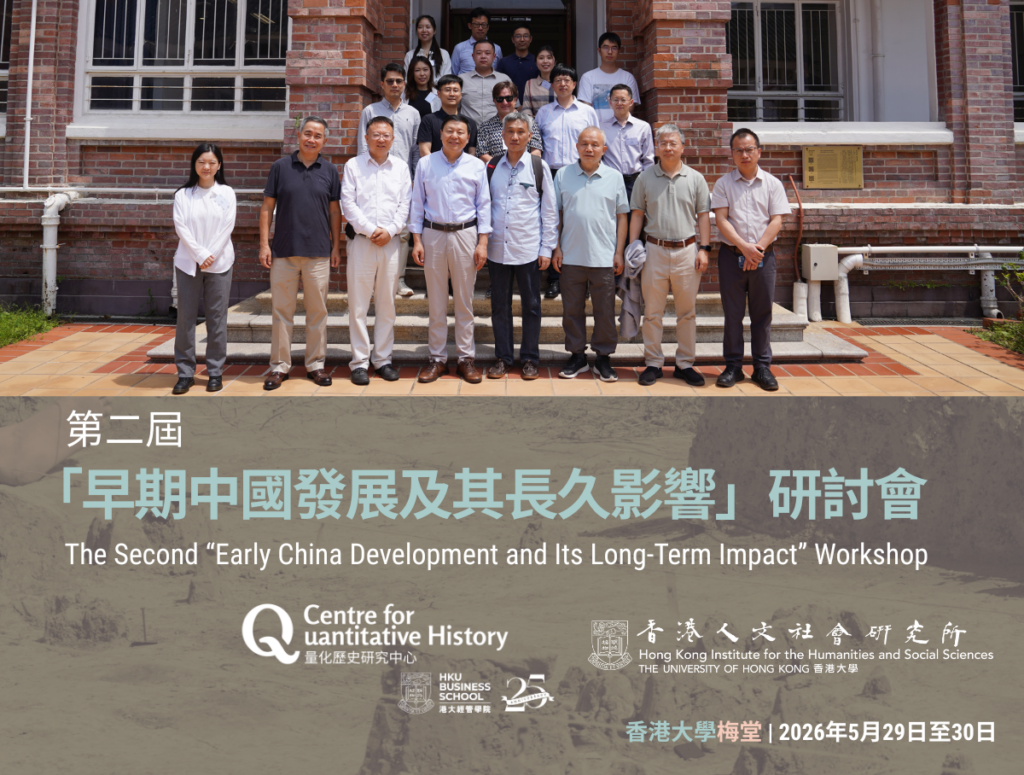
These questions were at the centre of the Second “Early China Development and Its Long-Term Impact” Workshop (第二屆「早期中國發展及其長久影響」研討會), held at May Hall, The University of Hong Kong, on May 29–30, 2026. Co-organised by the Centre for Quantitative History (CQH) and the HK Institute for the Humanities and Social Sciences (IHSS), the workshop brought together archaeologists, historians, economists and legal scholars to explore how new data, quantitative methods and archaeological evidence are reshaping the study of early China.
In his opening remarks, the centre and institute director Professor Zhiwu Chen reflected on the opportunities and challenges of interdisciplinary research. Archaeology, history and economics often work with different concepts, evidence and standards of proof. Yet it is precisely in these differences, he noted, that new questions and methods can emerge.
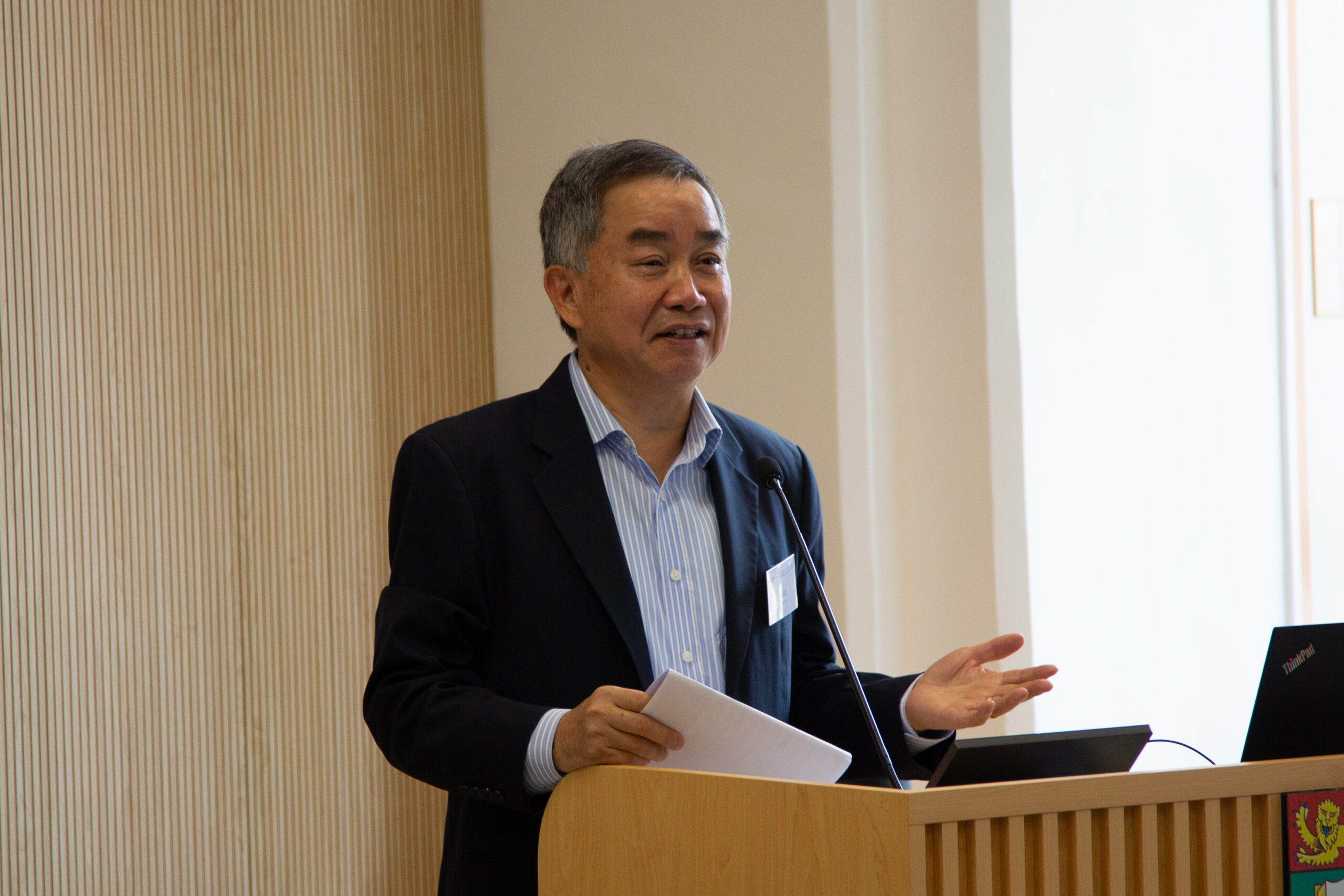
The workshop opened with a keynote lecture by the renowned archaeologist Professor Hong Xu of the Chinese Academy of Social Sciences. Drawing on major archaeological evidence from settlements, tombs, hydraulic systems and monumental architecture, Professor Xu examined the material foundations of social complexity from prehistoric China to the Qin and Han periods. His discussion of Erlitou (二里頭), Yinxu (殷墟), the Mausoleum of the First Qin Emperor (秦始皇帝陵) and the Liangzhu water-control system (良渚古城外圍水利工程遺址) set the tone for the workshop: early China must be understood through the interaction of technology, engineering, institutions and social organisation.

Professor Hong Xu, renowned Chinese archaeologist, giving his keynote speech “Early China’s mega-projects: archaeological discoveries and their significance” at the workshop
A major theme of the first day was the formation of complex societies. Dr Wei Li of Fudan University examined Longshan-period settlements (龍山文化) in Luohe, Henan, showing how climate change, wetland retreat, agricultural intensification and pressure on resources shaped settlement patterns and competition. Dr Yang Bai of Liaoning University used social network analysis to revisit the Chahai site (查海遺址), suggesting that inequality may have first appeared not as obvious wealth gaps, but as differences in household participation in production, ritual and access to resources. Professor Zhibin Yan of Tsinghua University reconsidered bronze vessel assemblages in late Shang tombs, arguing that not all bronzes found in a burial should automatically be treated as the tomb owner’s personal ritual objects. Some may have entered the tomb through kinship networks, funerary gifts or inter-group exchange.
The afternoon sessions focused on state formation and institutional change. Senhao Hu, a doctoral student at IHSS, presented a quantitative study of iron weapons and interstate competition during the Spring and Autumn and Warring States periods. Using the China Archaeological Database (CADB) being construct by the CQH, he argued that states with greater access to iron weapons were more likely to expand and survive. Professor Jingcheng He of Jilin University examined clan emblems and occupational inscriptions on Shang and Zhou bronzes, showing how specialised lineages may have provided technical, ritual and administrative knowledge to early states. Professor Baomin Dong of Liaoning University examined the evolution of enfeoffment, aristocratic estates and counties, cautioning against a simple narrative in which early China moved directly from feudal rule to centralised administration. Professor Pei Wang of East China University of Political Science and Law explored the early meanings of Li (禮) and Xing (刑), arguing that law in early China emerged gradually from ritual order, royal authority, punishment and political identity.
The second day began with a keynote lecture by Professor Zhiwu Chen, who revisited the role of technology in the rise of complex societies. Conventional accounts often stress the productive value of technology: better tools increased output, supported population growth and encouraged social specialisation. Professor Chen proposed a different emphasis. In prehistoric and early historical societies, where violence and insecurity were central concerns, the military use of technology may have been more important than its productive use. Drawing on archaeological panel data from 8000 to 2000 BCE, he showed that large settlements and social complexity were more closely associated with stone weapons than with stone farming tools. This mechanism, he suggested, continued into the Bronze and Iron Ages.
Several papers then moved from early technological change to long-term historical patterns. Professor Clair Z. Yang of Washington University examined the political divergence between China and Europe, shifting attention from the familiar question of economic divergence to the development of political institutions. Wanda Wang, a doctoral student at the HKU Business School, presented a long-run study of China’s economic geography, showing how population centres formed in the Neolithic period remained remarkably persistent, until the rise of treaty ports and institutional opening in the nineteenth century helped reshape the spatial economy.
Professor Yuqi Chen of IHSS and HKU Arts, one of the workshop conveners, introduced the latest progress of the CADB (China Archaeological Database) mentioned earlier. Her presentation showed how AI can help extract structured information from archaeological reports, which often contain scattered and heterogeneous evidence in text, tables, images and plates. She stressed that the goal is not digitisation alone, but the creation of data that are traceable, verifiable and suitable for analysis. The discussion also highlighted the continuing importance of human review, quality control and clear coding standards.
"The development of CADB 1.0 took six to seven years and involved nearly one hundred people before manual data entry and preliminary structuring were completed. The goal of CADB 2.0 is to fundamentally change this situation through digitisation and AI technologies: a more efficient processing workflow, stricter standardization protocols, and a shorter data update cycle."
Yuqi Chen
Assistant Professor in Digital Humanities (Pre-Qin Dynasty Chinese History), IHSS & HKU Arts
The final sessions examined technology, inequality, bureaucracy and the human body. Professor Joy Chen of Renmin University of China shared her joint work with the quantitative history group at HKU, using CADB data to study the relationship between iron technology and county formation. She suggested that the spread of iron agricultural tools may have strengthened centralisation by increasing the returns to local administration. Professor Zhan Lin, also of Renmin University of China and one of the conveners of this workshop, traced wealth inequality in China from 10,000 BCE to 600 CE using house size, tomb size, and grave goods. His findings suggest that inequality rose from the Neolithic to the Bronze Age but declined in the Iron Age, raising the possibility that technological change could alter distribution without major social collapse.
Professor Tao Guo of Wuhan University presented a quantitative study of Han officials, using a database of near 3000 prefectural governors and regional inspectors to trace changes in the geography of bureaucratic recruitment. Dr Doudou Cao of IHSS closed the paper sessions with a novel bioarchaeological study of body size (stature, relative body mass) and proportions in ancient China. Her findings revealed long-term changes across sex, region and period, linking physical variation to agriculture, climate, inequality and cultural practice.
The workshop concluded with a roundtable discussion between keynote speakers Professors Hong Xu and Zhiwu Chen, chaired by Professor Yuqi Chen. The discussion returned to a fundamental question: what can be quantified in archaeology? Professor Xu acknowledged that interdisciplinary work can be uncomfortable, as quantitative history and traditional archaeology do not always speak the same language. Yet he argued that this tension is productive. Archaeological materials still contain vast amounts of untapped information, and new methods can help reveal patterns that are otherwise difficult to see.
“Major research directions will not change because of the contingency of the data. One should first quantify, and then incorporate subsequent testing.”
“Everything can be measured.”
Hong Xu
Archaeologist and Research Fellow, Chinese Academy of Social Sciences
AI, Professor Chen emphasised, has made it possible to process archaeological material on a scale that was unimaginable before, while advances in statistics and econometrics have opened up new ways of asking historical questions. By saying that “everything can be quantified,” he was not suggesting that numbers should replace interpretation, but that careful measurement can help historians see patterns and pursue questions that open new paths of inquiry.
“The present is a ‘golden age’ for quantitative historical research.”
Zhiwu Chen
Chair Professor of Finance, HKU Business School and IHSS
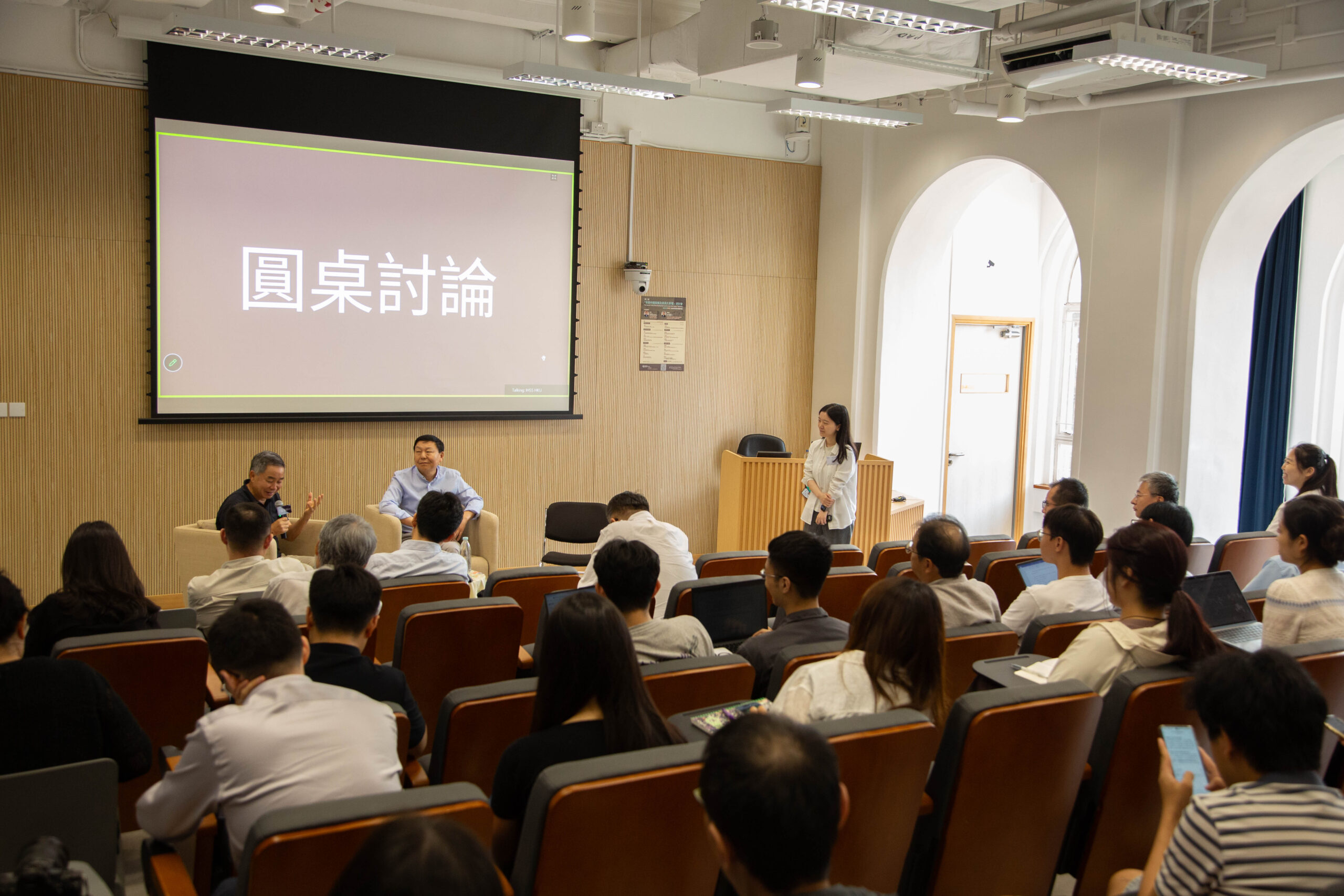
Roundtable discussion featuring archaeologist Professor Hong Xu and economist Zhiwu Chen exchanging insights on the workshop themes
Across two days, the workshop showed how the study of early China is being transformed by new evidence, new data infrastructures and deeper collaboration across disciplines. From stone tools and bronze inscriptions to iron technology, legal concepts, official careers and ancient bodies, participants demonstrated the value of bringing archaeological detail into dialogue with broader historical and social-scientific questions. As methods and data continue to develop, early China will remain a vital field for understanding not only Chinese history, but also the long-term dynamics of human society. The workshop closed on this forward-looking note, with participants looking ahead to future editions and to the new conversations they will continue to generate.

Workshop presenters and discussants posing for a sunny group photo with PhD student helpers, research assistants and administrators
About the “Early China Development and Its Long-Term Impact” Workshop
The “Early China Development and Its Long-Term Impact” Workshop is a continuing academic forum convened by Professors Zhiwu Chen and Zhan Lin, with Professor Yuqi Chen joining the organising group from the second edition. It brings together scholars working on early China, historical development, and the long-run effects of institutions, culture, economy, and society. The workshop aims to encourage interdisciplinary dialogue across history, archaeology, economics, political science, and related fields, providing a space for new research, comparative discussion, and collaboration across institutions.
Acknowledgement
We gratefully acknowledge the contributions of the authors, editors, and reviewers (listed in alphabetical order by last name) who helped prepare these highlights:
Contributing authors
- Yitong Tang, MPhil Candidate, IHSS, HKU
- Yuchen Wei, PhD Candidate, HKU Business School
- Xueqian Zhang, PhD Candidate, IHSS, HKU
- Sheng Zhou, PhD Candidate, IHSS, HKU
Editors
- CQH Comms
- Yitong Tang, MPhil Candidate, IHSS, HKU
- Yuchen Wei, PhD Candidate, HKU Business School
Reviewers
- Senhao Hu, PhD Candidate, IHSS, HKU
- Wanda Wang, PhD Candidate, HKU Business School
Photo album

More information
Please refer to this link for the workshop programme rundown:
Author(s)
CQH Comms
CQH Communications Team

Senhao Hu
Research Postgraduate Student | PhD, Economic History (QH Research Cluster, IHSS, HKU)
Wanda (Daniel) Wang
Research Postgraduate Student | PhD, Finance (HKU Business School)

Yuchen Wei
Research Postgraduate Student| PhD, Economics (HKU Business School)