




Biography
Felix Xinxian Li is a Ph.D. candidate in Economics at the Business School of The University of Hong Kong. Prior to joining HKU, he completed his bachelor’s and master’s degrees in Economics at Beijing Normal University and Kyoto University, respectively. His research focuses on development topics within historical Japanese and Chinese contexts. In his Japanese studies, Felix investigates the impact of media on language assimilation following the establishment of NHK radio, as well as the influential role of early female models during Japan’s transition from an agricultural to an industrial society. His Chinese studies delve into the development of state capacity in imperial China. Felix has presented his work at the 9th Annual Symposium of Quantitative History.
Related Publication and Projects

This paper examines the importance of local knowledge for state building. Drawing upon the quantity and quality of local gazetteers, the regional encyclopedias of imperial China, we measure the accumulation of local knowledge in 267 prefectures over a millennium. We find that the gazetteers facilitated the local penetration of state power and infrastructure between 1000 and 1820, and continued to contribute to the modernization of state infrastructure during the period of reform between 1860 and 1911. Analyzing the content of gazetteers reveals that the gazetteer effect arises from the richness, concretization, and uniqueness of records of local characteristics. These findings indicate that the state is not merely built on unified and standardized measures but also on context-based local knowledge that increases the legibility of subjects.
 February 2, 2026
 Working Papers
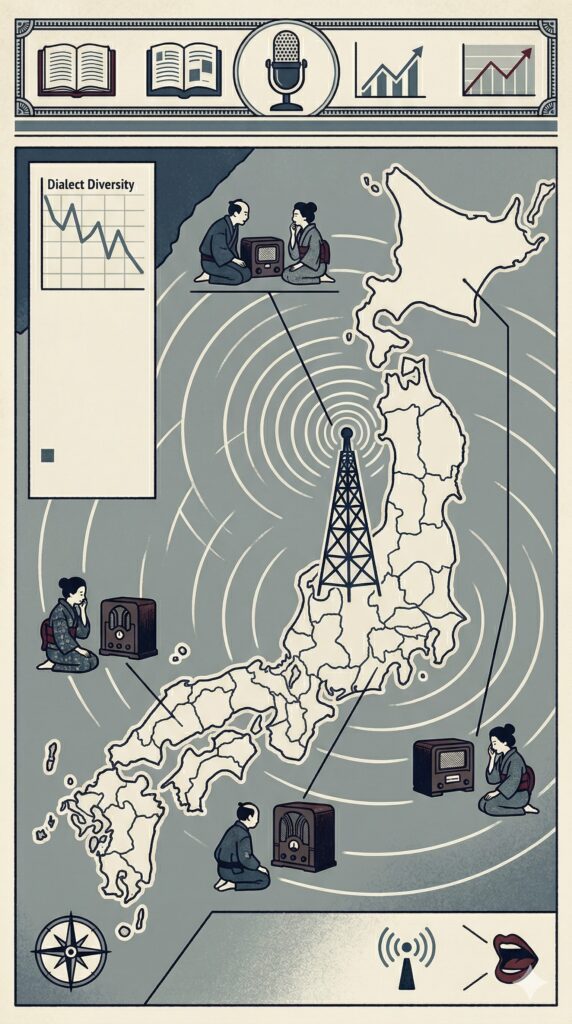
This paper examines how mass media influences language assimilation by studying the introduction of radio broadcasting in Japan between 1926 and 1950. Leveraging Nippon Hoso Kyokai (NHK)’s monopoly in radio broadcasting and its exclusive use of Tokyo dialect, I analyze how exposure to NHK radio affected local linguistic patterns. Using comprehensive linguistic atlases and radio signal data, I find that exposure to NHK radio significantly reduced language distance to Tokyo dialect. I further analyze how economic conditions, human capital, and institutional context moderated this assimilation effect.
March 26, 2026 Working Papers